What the evidence shows.
Reports separate completed check-ins and available verified route activity from planning assumptions. Your agreement defines the required evidence.

Getting things ready…
How it works
Businesses advertise on working vehicles. Owners carry the campaign on agreed routes. Nomad coordinates matching, installation and reporting.
Where we are today. Share your preferred market. Vehicle availability, installation and start dates are confirmed before booking.
Explore the highway routesFrom choosing your ad space to reviewing campaign delivery.
Sign in for an estimate using your vehicle, coverage and route choices. We review availability and actual costs before a final quote.
Review the artwork and installer’s quote. For new agreements, fund production, installation, removal and the first month before work begins.
nomad matches approved trailers, coordinates installation, and confirms the campaign start. Drivers receive their agreed installation and delivery instructions.
Review the monthly check-in or request a correction. Media is billed monthly in advance. For new agreements, upfront removal funding is credited at closeout, without charging it twice. Existing agreements retain their accepted terms.
From the route you know to another source of income.
Share your trailer details, usual highway routes, and availability. We review ownership or written permission, equipment condition, operating authority, and insurance.
Review the advertisement, the monthly pay and the 12-month term. You can decline any offer.
The advertiser pays for the wrap and its installation. Review the installation plan before work begins, then run your usual route.
Submit the agreed monthly walkaround. After service review and approval, payment follows your offer. If corrections are needed, you can resubmit.
The approved design is made to fit the truck. We set up printing and installation before the start date.
The advertiser pays for printing, installation and removal. The driver pays nothing.
Plan your campaignA wrap follows a real vehicle. Review the intended surfaces and the artwork for each panel before production.
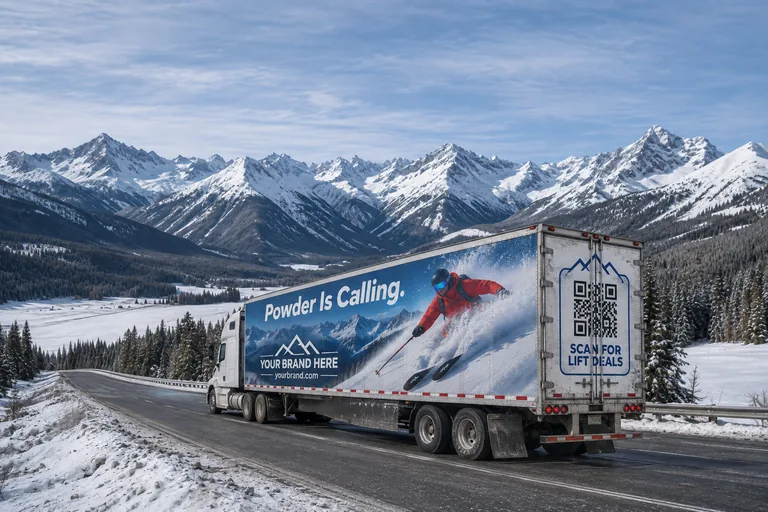
See how the long side sits behind the tractor. The cab is separate from the trailer placement.

See how side artwork and a rear-door treatment meet. A rear-inclusive concept needs approval for each surface.
Example designs, not templates. Review each surface and equipment availability before booking.
Equipment, weather, and freight schedules can change. The process has a clear path when they do.
We coordinate installation dates with the driver and the installer. If a schedule changes, we notify both sides. Your accepted offer or order defines the commitments, including downtime arrangements and campaign dates.
New agreements define service requirements, documented remedies and notice and cure procedures. There is no automatic mileage-based carrier pay deduction. Existing signed agreements retain their accepted mileage and credit provisions.
Reports separate completed check-ins and available verified route activity from planning assumptions. Your agreement defines the required evidence.
Exposure estimates describe potential opportunities to see the ad. They are not verified viewers, unique people or guaranteed results.
Joining starts a conversation. It does not reserve a vehicle or guarantee a campaign date.
Common questions about timing, installation, reporting, and cost.
Ask a questionTell us whether you advertise or drive. We’ll help you see the next step.